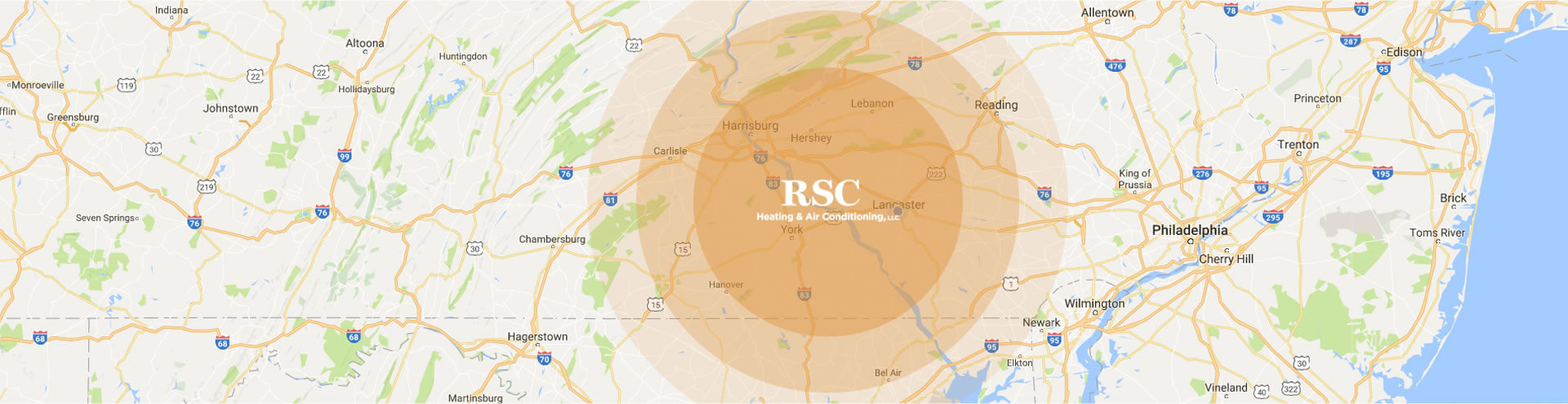



If you have cold bedrooms, warm hallways, hot upstairs rooms, or chilly spots near exterior walls, you’re not alone. Homeowners across Lancaster, York, Lebanon, Berks, Chester, and Dauphin counties deal with uneven heating every winter – especially in older homes.
This guide explains why uneven heating happens, how to diagnose the cause, and what you can do to fix it, including when to DIY and when to call the professionals at RSC Heating & Cooling.
Region-Specific Heating Challenges for Lancaster, York, Lebanon, Chester, Berks & Dauphin Counties
There are several factors that may be the cause for uneven heating in your Pennsylvania home:
Older houses are common.
Many Lancaster, York, and Lebanon County homes were built before modern duct standards existed. If a home was built before these standards were set – improperly sized duct-work and fewer access cleaning panels result in strain on the HVAC system.
Winters are long and cold.
The Susquehanna Valley sees 5,000–6,000 Heating Degree Days (HDD) each year — higher than most states — which makes uneven heating far more noticeable. More hours mean more wear on the unit.
Many homes were constructed without proper insulation.
Berks and Chester counties have a blend of stone, log, and modern construction, each losing heat differently. This is where an audit of the home envelope can be helpful to get to the bottom of where you’re losing heat.
Oil and propane systems can be expensive and typically include more maintenance.
In rural Pennsylvania, that often means:
- Sudden price jumps in January and February
- Higher overall winter heating bills
- Budget unpredictability
- Chimney inspections
- Frequent filter changes
- Combustion tune-ups
Common in Lancaster, Lebanon, Berks, and northern York, homes with less access to natural gas may struggle with soot inhibiting the airflow of their HVAC system often showing up as uneven heating. Buildup can put the home at risk of heating system fires.
Troubleshooting Uneven Heating – DIY vs. Professional Repairs
1. Fix leaky or poorly designed ductwork.
Ducts in older PA homes are often:
- undersized
- leaking 20–30% of heat into the basement or attic
- too long or poorly routed
Professional Fix
- Seal and resize your ducts.
- Replace duct sections that cause the most issues.
- Monitor changes in your home energy bill.
2. Unclog and Clean Dirty Furnace Filters

Asian woman changing the dirty air purifier filter after using for a long time in the dirty air environment. Using air purifier clean the air for better atmosphere in a house.
A blocked filter starves your system of airflow, causing:
- hot areas near the furnace
- cold rooms farther down the duct line
- overworking and strain on the system
DIY Fix
- Change filters every 30–90 days (more often in PA’s fall allergy season or if you have pets). Look up your furnace model to buy the correct replacement filters or ask your HVAC technician to source them for you.
- Get an annual fall furnace check-up to avoid these risks.
- Locate the serial number on your furnace to determine its age.
3. The furnace is undersized.
Older homes that underwent additions or renovations often have furnaces sized for the original layout.
Signs your furnace is undersized:
- The system runs constantly.
- Distant rooms never get warm.
- Large temperature swings.
Professional Fix
- Have a local HVAC Company assess your current furnace’s lifespan and options.
DIY Fix
- Check out financing options to make a purchasing plan.
- Research the best heating systems for your home.
4. Close Insulation Gaps and Air Leaks

Attics and basements in older Lancaster and York County homes are notorious for inadequate insulation.
Common trouble spots:
- attic floors and basements
- knee walls
- old window frames
- recessed lighting
- uninsulated pipes and chimneys
DIY Fix
- Learn about your home’s insulation envelope.
- Seal obvious leaks and supplement insulation.
Professional Fix
- Get a home envelope audit from your local HVAC company.
5. Watch out for closed or blocked vents.
Furniture, drapes, boxes, or rugs often cover vents without homeowners realizing it. These blockages can negatively impact your heating system’s capabilities.
DIY Fix
- Ensure all supply and return vents are unobstructed by laundry or supplies and are free of dust, pet hair, and lint.
- Check vents monthly or bi-monthly.
Professional Fix
- If an unblocked vent has no airflow, call a professional for a heater check up.
6. Multi-Level Home Challenges
Split-level homes in the Susquehanna Valley frequently suffer from:
- Hot upstairs
- Cold downstairs
- Imbalanced airflow
- Stack effect
- Single-zone central furnace or heat pumps
- Not having a variable-speed blower that can modulate output
DIY Fix
- Improve Your Home Envelope
Professional Fix
- Upgrade your heating system to one that’s made for a multi-level home.
- Zoned central HVAC units are the top choice for split homes with existing ductwork (furnace or heat pump).
- Ductless mini- split or multi-zone heat pump systems are great for homes lacking ductwork and for homeowners looking for both heating and cooling from the same unit.
- High-efficiency furnace with zoned or balanced duct design for people who want to stick with what’s available in their area (gas or propane).

7. Thermostat placement can cause problems.
If your thermostat is in:
- A warm hallway
- Near a heat source
- Next to an exterior wall
- Anywhere that doesn’t reflect the average temperature of your home
It can cause the system to short cycle, misunderstand the temperature of the rest of the house, or run longer than needed.
Professional Fix
- Treat your home to a thermostat relocation.
- Upgrade to a smart thermostat for targeted comfort.
Is a smart thermostat right for your home? Read about when a smart thermostat is better than a traditional style thermostat.
8. Set up active zoning in your HVAC unit.
Zoning allows separate temperature control on each floor and you can anticipate natural changes in temperature. PA homes larger than 2,000 sq. ft. almost always benefit from adding HVAC zoning.
Professional Fix
- Set up heat zone within your home.
- Adjust current zones for maximum coverage.
9. Weak or Failing Blower Motors.
Aging blower motors can’t push enough warm air throughout the entire duct system. Which is especially difficult for long runs during cold snaps – common in Berks and Dauphin counties.
Professional Fix
- Call a professional to replace the part and assess the safety of your heater.
10. Maintenance or safety issues.
Poorly maintained parts and systems can reduce heat output and increase the risk of injury by fire.
Look out for:
- Dirty burners
- Cracked heat exchangers
- Saturated filters
- Clogged flame sensors
Professional Fix
- Schedule an annual heating tune-up with a trusted, local HVAC company.
- Have a certified HVAC tech repair or replace worn out parts.
Troubleshooting Table: Causes of Uneven Heating (DIY vs. Professional)
| Cause | Symptoms | DIY Fix | Professional Fix | Notes |
| Leaky Ductwork | Rooms far from furnace stay cold | No | Yes | Common in older PA homes. |
| Clogged Filter | Weak airflow, dusty home | Yes | No | Replace every 60-90 days. |
| Blocked Vents | Some rooms cold | Yes | No | Rearrange furniture. |
| Undersized Furnace | System runs nonstop | No | Yes | Common after home additions. |
| Poor Insulation | Cold second floor / attic drafts | Partially | Yes | Attic insulation recommended. |
| Faulty Thermostat | Temps swing wildly | Yes | Yes | Placement matters. |
| Weak Motor | Hot near furnace, cold far away | No | Yes | Replacement often solves issues. |
| Lack of Zoning | Hot upstairs, cold downstairs | No | Yes | Ideal for multi-level homes. |
| Old Furnace | Uneven temps + rising bills | No | Yes | Often signals end-of-life. |
| Air Leaks | Drafts around windows/doors | Yes | Yes | PA homes often need sealing. |

How to Diagnose Your Uneven Heating Problem: A Step-by-Step Guide for Homeowners
- Check every vent and return grille. Walk through every room to ensure that supply vents (where air comes out) and return grilles (where air is pulled in) are completely unobstructed. Move any furniture, rugs, or heavy drapes that might be blocking the airflow, as even a partially covered vent can disrupt the entire system’s balance.
- Replace the furnace filter. Locate your furnace’s filter slot and swap out the old filter for a fresh one, ensuring the arrows point toward the blower motor. A clogged filter restricts the volume of air the system can push through your home, often causing the rooms furthest from the furnace to stay cold.
- Measure airflow at each vent. While the heat is running, hold your hand or a handheld anemometer over each vent to gauge the strength of the air coming out. Take note of any rooms where the airflow feels significantly weaker than others, as this indicates a localized blockage or a ductwork issue.
- Check for duct leaks (feel for escaping warm air). If your ductwork is accessible in an attic, basement, or crawlspace, run your hand along the seams and joints while the fan is on. If you feel air whistling out, seal the gap using specialized foil tape or duct mastic to ensure the heat actually reaches its intended destination.
- Inspect attic insulation depth. Head into your attic with a ruler to measure the thickness of your current insulation. If you can see the wooden floor joists, you likely don’t have enough insulation; increasing the depth helps trap heat in the living spaces below rather than letting it escape through the roof.
- Review furnace age and capacity. Find the manufacture date on your furnace’s nameplate and compare it to its expected 15–20 year lifespan. If the unit is undersized for your home’s square footage or has lost efficiency due to age, it may simply lack the “push” required to heat the entire house evenly.
- Evaluate thermostat location. Check if your thermostat is mounted near a heat source (like a sunny window or kitchen) or in a drafty hallway. A poorly placed thermostat will “ghost read” the temperature, causing the furnace to shut off before the rest of the house has reached the desired comfort level.
- Check for closed-off rooms. Ensure all interior doors are open or at least cracked to allow for proper air circulation throughout the house. Closing doors to “save heat” actually creates pressure imbalances that force your furnace to work harder and can lead to cold spots in adjacent rooms.
- Schedule a professional airflow test. Contact an HVAC technician to perform a formal “balancing report” or a blower door test. Professionals use specialized tools to measure static pressure and CFM (cubic feet per minute), identifying hidden issues deep within your walls that a visual inspection can’t find.
Long-Term Fixes for Uneven Heating in Pennsylvania
- Seal and repair ductwork. Hire a professional to apply duct mastic or Aeroseal to the joints and seams of your duct system. This prevents the warm air you’ve paid for from escaping into your basement or crawlspace before it ever reaches your living areas.
- Add or upgrade return vents. Consult with an HVAC specialist to determine if your home lacks sufficient return paths for air to get back to the furnace. Installing additional return vents in “dead zones” creates a circular flow that prevents air from becoming stagnant and cold in specific rooms.
- Install zoning. Divide your home into separate temperature zones using electronically controlled dampers within your ductwork. This allows you to send more heat to a chilly second floor while keeping the main level at a lower, more comfortable temperature.
- Upgrade to a variable-speed furnace. Select a model with a variable-speed blower motor that can adjust its output based on the home’s real-time needs. Unlike standard “on/off” furnaces, these units run longer at lower speeds to provide a constant, gentle flow of heat that eliminates cold pockets.
- Improve attic and wall insulation. Bring your attic insulation up to R-49 or R-60 standards to combat Pennsylvania’s harsh winters. Adding blown-in cellulose or spray foam to exterior walls will further prevent radiant heat loss and significantly reduce the workload on your heating system.
- Replace an aging furnace. If your system is over 15 years old, replace it with a high-efficiency unit that is properly sized for your home’s current square footage. Modern units are far more capable of maintaining consistent pressure throughout a duct system than older, struggling models.
- Install a smart thermostat. Mount a smart thermostat and pair it with wireless remote sensors placed in the coldest rooms of the house. The system can then be programmed to keep running until those specific “problem rooms” reach the target temperature, rather than just sensing the air in the hallway.
- Improve indoor air quality. Integrate a whole-home humidifier or a high-MERV air filtration system into your existing ductwork. Properly humidified air holds heat better and “feels” warmer at lower temperatures, allowing you to stay comfortable without cranking up the thermostat.

Should You Replace Your Furnace to Fix Uneven Heating?
You might need a replacement if:
- Your furnace is 15–20+ years old.
- Repairs are frequent.
- Heating bills keep rising.
- Your system is undersized.
- Your airflow is severely limited.
FAQ: About Uneven Heating in Homes
Why is my upstairs hotter than my downstairs?
Primarily because heat rises, duct runs may be longer to downstairs rooms, and older PA home often lack zoning.
Can duct cleaning fix uneven heating?
No. Most uneven heating is cause by leaks, blockages, or sizing.
Can I fix uneven heating myself?
You can try filter changes, vent checks, and basic sealing. Most root causes require professional diagnostics.
Why does my furnace run constantly, but rooms stay cold?
Your furnace may be undersized or ducts may be leaking.
Why PA Homeowners Choose RSC Heating & Air Conditioning
RSC is trusted across Lancaster, York, Lebanon, Berks, Chester, and Dauphin counties because we offer:
• Expert diagnostics and airflow testing.
• Honest repair vs replace guidance.
• Emergency winter service.
• Knowledge of PA housing and ductwork styles.
Don’t live with cold spots this winter. Contact RSC for help.
Warm every room of your home with expert diagnostics and solutions from RSC Heating & Cooling.