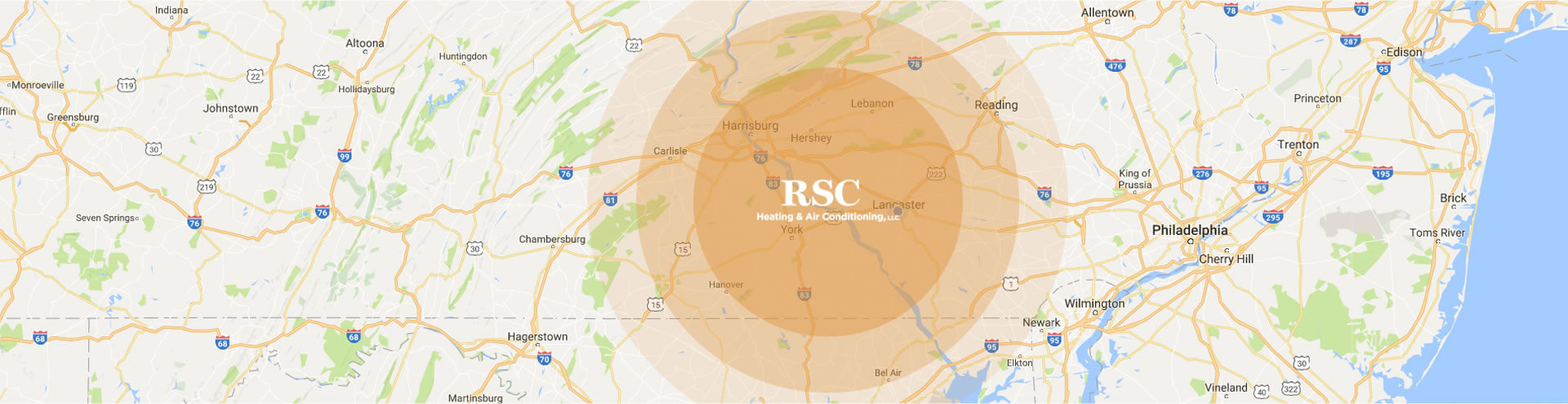



If you live in Lancaster, York, Lebanon, Berks, Chester, or Dauphin County, allergy season can feel like it never ends.
One week it’s tree pollen. The next week it’s grass pollen. Later in the summer, weeds and mold spores become the problem.
Many homeowners expect relief when they come inside. Unfortunately, that’s not always what happens! In fact, your home may contain many of the same allergens you’re trying to avoid by coming inside.
Good news: you can take steps to improve your indoor air quality and reduce allergen levels inside your home.
What Allergens Are Most Common in the Susquehanna Valley?

The Susquehanna Valley creates the perfect environment for several common allergens. Our region combines farmland, woods, suburban neighborhoods, and humid summer weather. Together, these conditions create a long allergy season here.
Tree Pollen
Tree pollen is one of the first allergens to appear each year. Common offenders in Southeast PA include:
- Oak
- Maple
- Birch
- Sycamore
Do you have these trees in your yard or neighborhood? While tree pollen peaks in spring, some homeowners continue experiencing allergy symptoms into early summer.
Grass Pollen
Grass pollen becomes a major issue during late spring and early summer. This is one reason many people notice allergy symptoms while mowing the lawn or spending time outdoors.
Weed Pollen
As summer progresses, weed pollen becomes more common.
Ragweed gets most of the attention, but isn’t the only weed that triggers allergy symptoms.
Mold Spores
Mold thrives in warm, humid conditions.
You can find mold spores outdoors and indoors:
- Mulch beds
- Damp basements
- Crawl spaces
- Bathrooms
- Areas with poor ventilation
Dust Mites
Dust mites live inside homes year-round.
They prefer warm, humid environments, which makes summer an especially active time for them.
Pet Dander
Pet dander is one of the most common indoor allergens.
It collects in carpeting, furniture, bedding, and other surfaces throughout the home.
Why Does the Susquehanna Valley Have So Many Allergy Triggers?
Homeowners in Lancaster, Lebanon, York, Berks, Chester, and Dauphin Counties face a unique combination of allergy challenges.
Our area has: thousands of acres of farmland, high summer humidity, dense tree coverage, and long growing seasons.
Agricultural activity can also add dust and other airborne particles to the mix. All of these contribute to poor air quality and seasonal allergy symptoms.
Why Are My Allergies Worse Inside Than Outside?

This surprises a lot of homeowners. You might expect your symptoms to improve as soon as you walk inside, but sometimes the opposite happens.
That’s because allergens can build up indoors over time.
Dust mites, pet dander, pollen, and mold spores often remain trapped inside your home. Unlike outdoor air, indoor air does not always have adequate circulation to get rid of these particles.
As a result, allergens can build up in your living space and you may notice: sneezing, congestion, itchy eyes, sinus pressure, headaches and trouble sleeping.
If you wake up feeling stuffy every morning, indoor allergens may be part of the problem.
How Does Pollen Get Inside If My Windows Stay Closed?

Many people assume closed windows solve the problem. Unfortunately, pollen is very good at finding its way indoors. You can bring pollen into your home through:
- Shoes
- Clothing
- Pets
- Open doors
- Garage doors
- Small air leaks around windows and doors
Your HVAC system can also circulate pollen that has already entered your home. Once pollen settles into carpeting, furniture, bedding, and rugs, it can affect indoor air quality for days or even weeks.
Indoor Air Quality Solutions: Start Small and Work Your Way Up
You don’t always need expensive equipment to improve indoor air quality. Many homeowners see noticeable improvements by starting with a few basic steps.
Keep Your Home Clean

Regular cleaning helps remove allergens before they build up.
Focus on:
- Vacuuming carpets and rugs
- Dusting furniture
- Washing bedding weekly
- Cleaning pet sleeping areas
- Reducing clutter
A vacuum with HEPA filtration may help capture smaller particles that traditional vacuums miss.
Change Your HVAC Filter Regularly
Your HVAC filter plays an important role in indoor air quality. As air moves through your system, the filter captures dust, pollen, and other airborne particles. When the filter becomes dirty, it can’t do its job as effectively.
Check your filter regularly, especially during peak allergy season.
Control Indoor Humidity
Humidity affects more than comfort. It also affects indoor air quality.
High humidity levels can result in:
- Mold growth
- Dust mites
- Musty odors
Most homes perform best when indoor humidity stays between 30% and 50%. If humidity is a constant problem, your HVAC system may be able to help.For more information, check out our guide to managing home humidity levels in summer.
Upgrade Your Air Filtration
Not all HVAC filters offer the same level of protection. Depending on your system, upgrading your filtration may help capture:
- Pollen
- Pet dander
- Dust
- Mold spores
Many homeowners notice cleaner air and less dust buildup after upgrading their filtration system.
Is A Portable Air Purifier Enough?
A portable air purifier can help reduce allergens in a single room. That’s great if your symptoms are mostly limited to a bedroom, nursery, or home office.
The challenge is that the rest of your home still contains the same air. Pollen, dust, pet dander, and mold spores can continue circulating through other rooms.
For some families, a portable unit provides enough relief. For others, it only addresses part of the problem.
If you’re looking to improve air quality throughout your entire home, a whole-home solution may be a better fit.
When Should You Consider A Whole-Home Air Purifier?
Not every household needs advanced air purification. However, some families can benefit significantly from it.
A whole-home air purifier might make sense if you have:
- Family members with allergies
- Asthma sufferers
- Multiple pets
- Persistent dust problems
- Ongoing indoor air quality complaints
- Respiratory sensitivities
Homes located near farms, busy roads, or construction activity may also benefit from additional filtration.
Unlike portable air purifiers, whole-home systems work with your HVAC system to treat air throughout the entire house. That means cleaner air in every room, not just one.
For homeowners who struggle with allergies year after year, a whole-home solution can provide an extra layer of protection.
The Best Home Air Filter in the World
The IQAir Pro home air filter system outperforms every other HEPA filter on the market.

Even more shocking is that it outperforms every other option with:
- No Electricity
- No Moving Parts
- No Noise
- One filter per year
It attaches directly to your current central HVAC system without adding any additional monthly operating costs or restricting any airflow. Instantly add pure filtered air to your whole home through your central HVAC system.
Schedule an Air Purifier Estimate
FAQs About Indoor Allergens
Can my HVAC system spread allergens throughout my home?
Yes. If allergens enter your HVAC system, they can circulate throughout the home unless they are captured by proper filtration.
How often should I change my air filter during allergy season?
Allergy season shouldn’t greatly affect how often you change your Central HVAC filter. The general advice is every 6 months, but you could consider changing the filter every quarter. Any shorter, and you’ll be throwing away air filters with a lot of life left in them.
Can humidity make allergy symptoms worse?
Yes. High humidity can increase mold growth and dust mite activity, both of which can worsen allergy symptoms.
Will an air purifier eliminate allergies completely?
No. However, air purification can reduce many airborne allergens and help improve indoor air quality.
Take Control of Indoor Air Quality This Allergy Season
You can’t control every allergen outside your home. However, you can control many of the allergens inside it.
Simple steps like cleaning regularly, changing HVAC filters, and managing humidity can make a noticeable difference. For families dealing with persistent allergy symptoms, upgraded filtration and whole-home air purification may provide even greater relief.

If you’re concerned about indoor air quality in your Susquehanna Valley home, RSC Heating & Air Conditioning can help. Contact our team to evaluate your current system and find filtration, humidity control, and air purification solutions that fit your needs.